

Have you ever wondered why investors focus on just a few major markets? Take the NYSE, for example. It boasts a market value of $31.7 trillion. Nasdaq isn’t far behind. These markets show huge promise, powered by big names like Apple and Microsoft.
Their impressive numbers tell a story of opportunity and growth that many find hard to resist. If you're on the hunt for real possibilities, stick around. We'll explore how these markets are reshaping the way we look at global trading.
Global Markets at a Glance: Leading Exchanges and Top Valued Companies
Global markets continue to grab investor attention by blending huge market sizes with standout company values. For example, the New York Stock Exchange boasted a market cap of $31.7 trillion as of May 2025. Nasdaq follows close behind at $29.9 trillion, largely driven by its tech-heavy listings like Apple, Amazon, Microsoft, and Alphabet. This shows not only how deep these markets run but also highlights a mix in listings, from thousands of stocks on major exchanges to just a few hundred on newer ones.
| Exchange | Market Cap (USD Trillions) | Listed Securities |
|---|---|---|
| NYSE | $31.7 | Over 2,400 companies |
| Nasdaq | $29.9 | Technology-heavy listings |
This kind of data helps investors figure out where the opportunities might be. If you're curious about more details on global trading spots, you can always check out global market insights at "https://realrealnews.com?p=global-markets-insights."
At the same time, company valuations play a big role in shaping our view of market leadership. In October 2025, the world’s top 50 companies highlighted a clear trend: tech and AI innovations are reshaping what value means. Think about it, Nvidia hit a valuation of $4.53 trillion, while Apple and Microsoft stood strong at $3.9 trillion and $3.89 trillion respectively. These figures show how new tech and smart strategies drive immense growth.
In essence, the strong presence of leading exchanges combined with high-valued companies gives investors a solid snapshot of market potential. It’s a clear picture of how global markets work and where the next big opportunities might be waiting for you.
Largest Global Equity Markets: Stock Exchanges Compared

Global capital markets offer different experiences, each with its own style of trading and rules that change over time. The NYSE started as a local exchange and grew into a stable market known for its strict trade rules. Nasdaq, on the other hand, built its reputation using modern electronic systems that attract technology innovators. You know, before we had today's risk management tools, the NYSE set the bar with its tight oversight, helping make trading more open and clear.
| Exchange | Market Cap (USD Trillions) | Listed Securities |
|---|---|---|
| NYSE | $31.7 | Over 2,400 companies |
| Nasdaq | $29.9 | Technology-heavy listings |
Trends from the past and changes in rules continue to shape what investors look for. Nasdaq’s modern approach steered it away from the classic trading floor vibe of the NYSE. Next, experts believe that as markets focus more on liquidity and solid past performance, emerging exchanges might grow their listings and tighten their regulations to win over a larger group of investors.
Largest Global Markets: Top Company Valuations in October 2025
Corporate valuations give us a clear look at the bigger market picture. High numbers from tech firms not only point to success in technology but also spark changes in industries like manufacturing, healthcare, and consumer services. For example, when tech companies see rising valuations, there's often a boost in funding for digital upgrades across different sectors. Even players like Amazon and Tesla, though not at the top, show how fresh ideas are steering investment worldwide.
- Nvidia: $4.53 trillion
- Apple: $3.9 trillion
- Microsoft: $3.89 trillion
Market experts say that strong tech and AI numbers open up new growth paths in other industries. There's a fun fact: before Apple became the giant it is today, it dabbled with smaller products that hinted at its future success. This trend makes investors wonder how advances in artificial intelligence might soon bring in more revenue and change how businesses operate.
3 largest global markets Shine With Opportunity
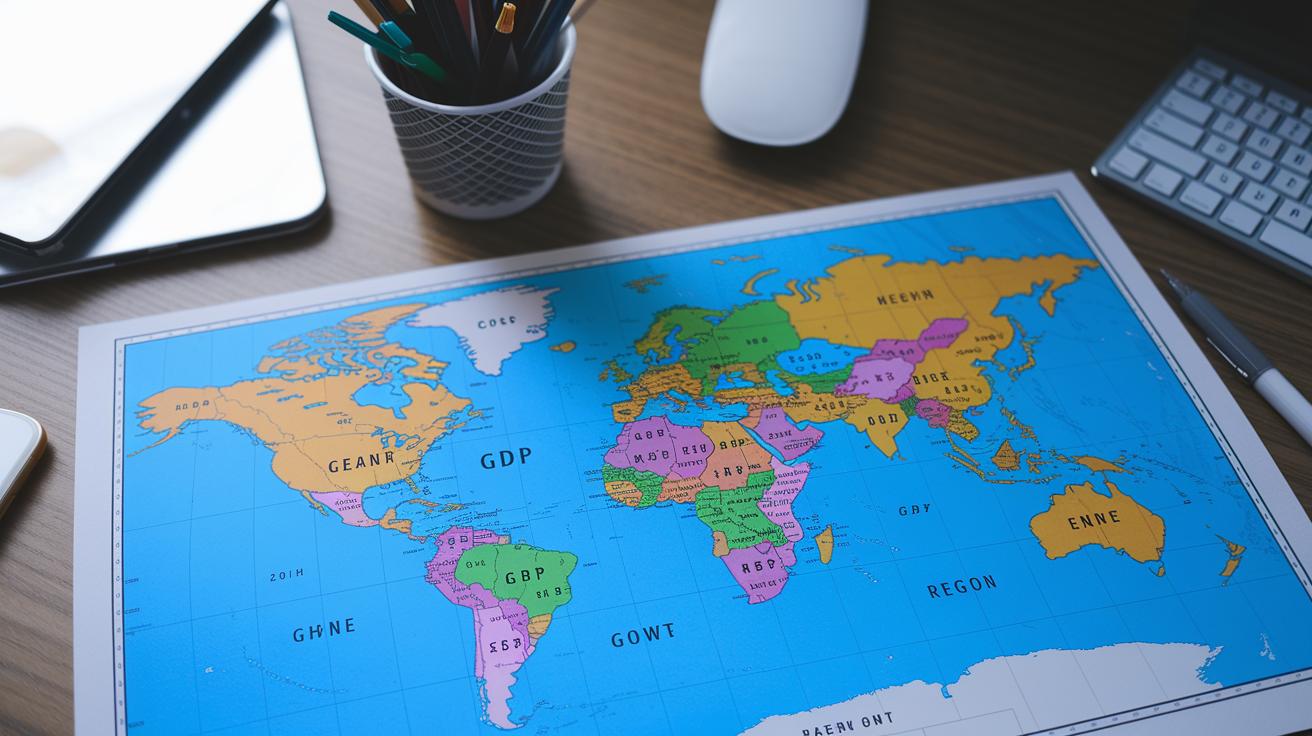
Global market trends are set to change the international economy. Experts predict steady GDP growth from 2025 to 2040, although the pace of growth will differ by region. Advanced economies are likely to see consistent progress, while emerging markets could quickly catch up thanks to major infrastructure improvements. For example, in some places, GDP growth might surge so fast that long-established market leaders could be challenged by newer, rapidly growing economies.
Reports show that shifting regional growth rates may change the balance of global economic power. Long-established financial centers will continue to do well, but other markets are expanding at a remarkable pace. Imagine infrastructure spending in transportation and digital technology reshaping local business scenes. Simply put, these investments could significantly boost market sizes over the next 15 years.
Between 2025 and 2040, planned investments will focus on key sectors such as energy, transport, and digital networks. This kind of investment will help local companies grow and attract foreign funds. In emerging markets, these upgrades can lead to economic breakthroughs, opening doors for both large corporations and regional start-ups. It's like upgrading a machine with new parts that make everything run smoother. These developments promise to create lively cross-border economic activity and highlight the exciting opportunities in the three largest markets.
Global Markets Composition: Commodities, Bond Markets, and Alternatives
Stocks tell only part of the story. Look at commodities and bonds, too. When you compare things like gold reserves with U.S. Treasuries, you see hints of economic confidence. In fact, one study found that when gold reserves change, treasury yields often change too. That surprising detail gives us a peek into how people feel about the economy.
The world of commodities goes beyond just precious metals. Investors are now looking at rare earths and even gold that hasn't been mined yet. These sectors might not generate the daily buzz like tech stocks, but they show solid promise, especially as manufacturers and tech companies need more raw materials.
Now, take the U.S. Treasury market. It's one of the largest and most active bond markets in the world. Many investors choose it as a safe spot because it offers steady returns without too much risk. This security helps balance the more exciting parts of the market, giving investors options that focus on both growth and safety.
- Comparing sovereign gold holdings with U.S. Treasuries proves useful for understanding market stability.
- Looking at rare earths and unmined gold reserves highlights alternative investment choices.
All in all, these non-stock investments play a big role in shaping global markets.
Emerging Global Markets: High-Growth Economies to Watch

Emerging markets are grabbing a lot of attention these days. Historical trends show that their market share has grown a ton from 1900 to 2023. In South and Southeast Asia, changes in population and fast tech adoption are giving these countries a bigger role on the global stage. Imagine a small, local market suddenly becoming a bustling center of trade, that’s the kind of change we’re seeing.
Recent data shows that these regions are key players for future growth. South Asia, with its growing number of young people getting on board with digital tools, is set to drive new innovation in both old and new industries. In Southeast Asia, the rise in international trade paints a clear picture of shifting economic power. It’s pretty clear that mixing a young, dynamic population with rapid tech adoption is changing the way global markets work.
Investors are starting to take notice. These emerging economies aren’t just boosting local business, they’re also changing global economic trends. With increasing trade and new tech trends, high-growth markets are set to challenge old leaders and reshape our idea of worldwide market dynamics.
Final Words
in the action, we explored top equity exchanges with record capitalizations and reviewed key company valuations from leaders like Nvidia, Apple, and Microsoft. We also broke down GDP forecasts, planned infrastructure investments, and compared bond and commodity markets to uncover alternative opportunities. Emerging markets showed potential for future growth, adding fresh dimensions to global investment strategies. This clear snapshot of business momentum and market trends leaves us ready to seize opportunities in the largest global markets.
FAQ
What is the world’s largest global market?
The world’s largest global market is the New York Stock Exchange, which holds a market capitalization of $31.7 trillion and lists thousands of securities, making it a central platform for global investing.
Which country houses the biggest market in the world?
The biggest market is based in the United States, where leading exchanges like the New York Stock Exchange and Nasdaq drive a large share of global market capitalization.
What are the top five largest stock markets in the world?
The top five stock markets include the New York Stock Exchange, Nasdaq, London Stock Exchange, Tokyo Stock Exchange, and Shanghai Stock Exchange, each known for high market cap and extensive listings.
What do exchanges like NSE, BSE, and NYSE American represent?
Exchanges like NSE, BSE, and NYSE American serve as key regional trading platforms offering a variety of listed securities and reflecting the diversity of national financial centers.
What does the term “global market cap trillion” refer to?
The term “global market cap trillion” refers to the enormous combined market value of leading stock exchanges, with some like the NYSE reaching market caps measured in trillions of dollars.
What are the top emerging markets?
The top emerging markets generally include high-growth economies, especially in South and Southeast Asia, where rising consumer demand and technological progress are reshaping global financial dynamics.