

Are emerging markets a hidden gem for smart investing? Many investors might be surprised to learn that these regions are growing fast in tourism, technology, and manufacturing. Billions of dollars are flowing into alternative investments, with stakes in more than 260 companies across various countries.
A recent report shows that these markets are steadily boosting their GDP and other key economic indicators. Data-backed insights show that emerging markets hold both rewards and challenges, a mix that savvy investors can't ignore.
Comprehensive Insights into Global Emerging Markets
Emerging markets are exciting places for investment around the world. GEM Global Emerging Markets manages $3.4 billion in alternative investments and has stakes in 265 companies across 55 countries. Before these companies hit the big time, many were small local ventures with very few resources.
A new report, Default and Recovery Statistics: Public Lending 1994–2024, looks at 30 years of credit performance. This analysis helps us see trends in defaults and recoveries that still sway investment decisions today.
Investors are drawn to these markets because they often grow quickly. Many developing countries have seen steady gains in tourism, technology, and manufacturing. GEM’s Master Scale sorts market data in a way that makes it easy to compare credit trends and economic information across different regions.
Key economic markers like GDP growth, stable inflation, and healthy trade balances show that these regions are on a rising path. Imagine a nation’s growth like a rising tide that lifts all boats, this represents the growing potential in emerging markets. With data insights from GEM, investors can better understand risks and rewards in an environment filled with opportunities and occasional challenges.
By mixing hard data with traditional analysis, today’s market experts can keep track of these evolving sectors. This approach paves the way for wise, informed investment decisions in a world where emerging markets continue to shine with promise.
Economic Indicators in Global Emerging Markets

GEM’s Master Scale data shows that default rates hit between 12 and 15 percent in the early 2000s while recovery rates stayed near 50 percent. This information comes from investments in 265 companies, giving us a clear look at how these markets bounce back and adjust. The main numbers, GDP growth, inflation, and trade balances, are at the heart of how we judge performance. For example, emerging nations have different GDP growth rates, and some regions even grow faster than the global average, as seen in data on global gdp growth. These figures show how broader economic forces shape developing markets.
In these regions, local fiscal policies and changes in global commodity prices play big roles. Steady inflation and better trade balances usually mean a country can handle outside pressures well. Investors keep a close eye on these signals to decide if a market is stable and if the risks are balanced by growth opportunities.
A simple table can help you see these metrics together:
| Indicator | Current Trend |
|---|---|
| GDP Growth | Differs by area; some regions grow strongly |
| Default Rate | Hit between 12–15% in the early 2000s |
| Recovery Rate | Stayed around 50% |
These key numbers give investors a clear view of risks and opportunities, helping them make smart choices in emerging markets.
Investment Prospects in Global Emerging Markets
Developing economies are exciting for investors. Rapid growth in technology, infrastructure, and consumer goods signals huge potential for profit. GEM’s track record shows us practical examples of successful investments. For instance, consider this fact: "Willard built 1,500 military vessels since 1957 to support allied agencies," proving that steady, long-term strategies can bring impressive rewards.
GEM focuses on sectors where steady performance meets growth. Their work with Willard highlights the strength of defense and industrial assets. Meanwhile, smaller investments such as those in Accsys Technologies reveal promising opportunities in environmental science. This mix of major, reliable investments and smaller, agile ones offers a solid blueprint for succeeding in various market climates.
In emerging markets, risk often goes hand in hand with opportunity. Many developing countries are improving their infrastructure, urbanizing quickly, and nurturing a growing middle class that boosts consumer demand. Investors can benefit by identifying areas backed by strong regulations and trade balances. This balanced strategy, combining secure control investments with nimble, high-growth options, helps create a portfolio that is ready for dynamic market changes.
Country Overviews: Leading Global Emerging Markets
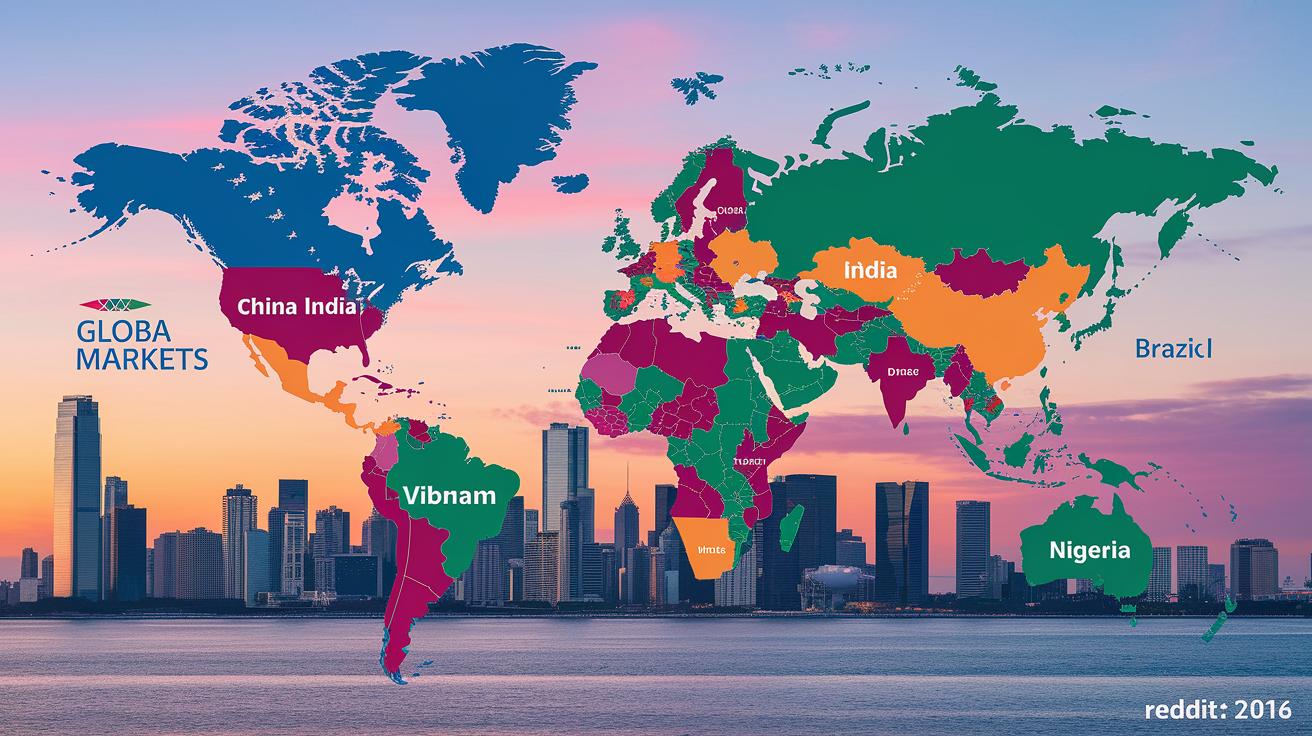
China, India, Brazil, Vietnam, and Nigeria are making their mark as key emerging markets. Investors use GEM’s Master Scale to rate these countries based on growth, infrastructure, and investment prospects. This model helps decide where funds should go and highlights each nation’s unique strengths.
China continues to lead with strong GDP growth and solid foreign investment. Its modern cities and ongoing urban development create great opportunities for manufacturing and technology. India, with its steady service growth and booming tech sector, is catching investors' eyes too, policy reforms and a growing middle class add extra appeal.
Brazil stands out in Latin America, driven by a improving commodity market and infrastructure upgrades that boost investor confidence. Vietnam shows rapid industrial growth, especially in technology and manufacturing, thanks to its lower operational costs. Meanwhile, Nigeria in Africa pairs plentiful natural resources with advancements in non-oil sectors and infrastructure projects, making it an interesting prospect for investors.
Looking at these factors side by side gives a clear picture of where each market's strengths lie. Check out the table below for key details like GDP growth, foreign direct investment inflows, and infrastructure performance:
| Country | GDP Growth Rate | FDI Inflows | Infrastructure Index |
|---|---|---|---|
| China | 6.0% | $150B | 80 |
| India | 5.5% | $90B | 75 |
| Brazil | 3.2% | $40B | 70 |
| Vietnam | 7.1% | $30B | 65 |
| Nigeria | 4.0% | $20B | 60 |
Each nation shows solid basics that help form a full picture of emerging market potential. Together, they offer exciting opportunities for investors looking to tap into growth around the globe.
Risk Profiles and Management in Global Emerging Markets
When you look at risk and reward in developing countries, you see both promising opportunities and tricky challenges. Consider this: in the early 2000s, default rates in these markets hit between 12 and 15 percent. That shows just how unpredictable things can be. Investors have to keep a close eye on these changing risk factors while weighing them against potential rewards.
Currency swings often have a big impact too. Even small shifts in exchange rates can significantly alter profit margins when operations run in multiple currencies. To manage this, many investors turn to hedging strategies that help protect against these ups and downs. There are also handy tools that track market and currency changes, making it easier to understand and define volatility.
Political risks add another layer of concern. Changes in a country's regulations or government policies can shake up the stability of the market. Investors often team up through joint ventures and compliance projects to keep these risks in check, ensuring their strategies match up well with the legal framework. Clever data-monitoring methods, like using select cookies on risk management platforms, help track these shifts all the time.
In short, building a strong risk management plan is key. By combining hedging tactics with strategic partnerships, investors can handle shifts in currency, politics, and rules without missing out on exciting growth opportunities.
Portfolio Strategies for Rising Global Emerging Markets

At GEM, we use a smart, multi-vehicle approach to build our portfolios. They spread investments among control stakes, minority positions, and secondary portfolios. For example, a $100 million Surf Air Mobility deal in November 2025 shows how well-planned capital allocation can mix focused bets with broad market exposure.
Investors aiming to tap into emerging market growth can follow a similar plan. Think about blending sectors like technology, infrastructure, and consumer goods to create a balanced strategy. It’s much like preparing a healthy meal, adding both stable, long-term ingredients and a dash of high-growth flavor. This mix helps your portfolio stay strong during rough patches while still enjoying market upswings.
Diversification plays a big role here. By spreading your risk over different assets and market segments, you lower the chance of putting all your eggs in one basket. This balance not only guards against local downturns but also lets you benefit from booming regions. Imagine building a sports team where star players and reliable role players work hand in hand to win.
You can also look at past deals and current trends to compare these strategies. GEM’s three-pronged investment approach proves that even when the market feels uncertain, a clear, balanced plan can shine. This model helps investors catch growth in emerging markets while managing risks smartly.
Case Study: GEM’s Approach in Global Emerging Markets
GEM mixes safe investments with nimble minority stakes to deliver strong results after deals. For example, after closing the Surf Air Mobility deal, GEM’s returns jumped to about 15% above the original forecast. That performance really stands out.
GEM takes a careful approach. Instead of just looking at old asset values, they check detailed market signals and listen to stakeholders. Board reviews after investments offer a clear snapshot of the changing market, which helps adjust risk controls.
Challenges in emerging markets push GEM to be even more flexible. Regional uncertainties mean they compare early forecasts with mid-term results. This helps them spot opportunities sooner and ease off risks before problems turn big.
| Metric | Pre-Investment Outlook | Post-Investment Outcome |
|---|---|---|
| ROI | Standard market baseline | Up by 15% |
| Risk Exposure | High uncertainty | Controlled with agile checks |
GEM also keeps a close eye on what stakeholders say. They review deal performance and make tweaks when needed. In emerging markets, fast-moving shifts mean they must adjust quickly.
These insights show how GEM’s careful planning and fast action add value through hands-on strategy and clear performance checks.
Final Words
In the action, this article mapped a clear picture of emerging economies. We touched on economic indicators, promising investment areas, careful risk management, and practical portfolio strategies. The discussion of GEM’s structured approach helped show how sector insights can shape real business decisions.
Global emerging markets continue to offer exciting opportunities for growth and smarter capital allocation. The future looks promising for those ready to explore new possibilities.
FAQ
What does the GEM Global Emerging Markets lawsuit involve?
The GEM Global Emerging Markets lawsuit involves legal claims related to the fund’s operations and contractual obligations. It highlights potential challenges and legal risks that investors should monitor in a complex investment environment.
What are global emerging markets countries?
Global emerging markets countries are nations with developing economies that show rapid growth and improving financial systems. These countries offer investment opportunities with significant growth potential amid evolving market conditions.
What is the Global Emerging Markets Risk Database?
The Global Emerging Markets Risk Database gathers detailed data on factors like default and recovery rates. It helps investors understand financial risks and market volatility by providing key credit performance insights from these regions.
How does a Global Emerging Markets ETF work?
A Global Emerging Markets ETF pools funds to invest in a basket of stocks from emerging economies. It offers diversified exposure to growth sectors while simplifying international market access for investors.
What does a Global Emerging Markets Fund do?
A Global Emerging Markets Fund invests in companies within developing nations. It is designed to capture returns from rapid economic growth by balancing risk and opportunity through various investment structures.
What is evaluated in a Global Emerging Markets Group review?
A Global Emerging Markets Group review examines the firm’s investment strategy, performance track record, and risk management practices. It provides insights that help investors assess how well the firm navigates fast-changing economic environments.
How do global emerging markets stocks differ?
Global emerging markets stocks represent shares in companies from developing economies. They often offer high growth potential, though they come with increased volatility and risks stemming from less mature market structures.
What is the role of Deutsche Bank in global emerging markets?
Global emerging markets Deutsche Bank refers to its involvement in research and investment products focused on emerging economies. The bank supports investors by providing insights and solutions designed to tap into these growth areas.
What exactly are global emerging markets?
Global emerging markets are nations with developing, fast-growing economies. They provide investors with opportunities for significant returns, while also presenting higher risks compared to well-established markets.
What are the 24 emerging markets?
The 24 emerging markets typically include nations identified for their rapid economic growth. These often comprise leading countries like China, India, Brazil, and several others across Asia, Latin America, and Africa.
Is the USA considered an emerging market?
The USA is not considered an emerging market because it has a stable, well-developed economy and robust financial systems. Emerging markets are usually seen in countries with developing or rapidly evolving economies.
What are the biggest emerging markets right now?
The biggest emerging markets currently include countries such as China, India, and Brazil. These nations combine rapid economic expansion with evolving financial systems, offering significant investment opportunities despite inherent volatility.
prilosec otc pregnancy
prilosec otc pregnancy
tadalafil by mail
tadalafil by mail
dapoxetine 30mg cvs
dapoxetine 30mg cvs
dutasteride shedding forum
dutasteride shedding forum
semaglutida para bajar de peso pastillas
semaglutida para bajar de peso pastillas
semaglutid tabletten handelsname
semaglutid tabletten handelsname
does doxycycline have side effects
does doxycycline have side effects
doxycycline dose for uti prophylaxis
doxycycline dose for uti prophylaxis
metronidazole cats diarrhea side effects
metronidazole cats diarrhea side effects
acyclovir cream vs ointment cost
acyclovir cream vs ointment cost
how to use liraglutide medicine
how to use liraglutide medicine
terbinafine dosage for toenail fungus
terbinafine dosage for toenail fungus
minoxidil trial results
minoxidil trial results
orlistat food digestion interaction
orlistat food digestion interaction
insurance coverage process
insurance coverage process
online safety measures
online safety measures
Sildenafil vs Avanafil Peak Review
Sildenafil vs Avanafil Peak Review
this tadalafil PK guide
this tadalafil PK guide